


Five Crowns: Kingdom Quest
4.547.00 Reviews
App Specs
- Version
- 1.9
- Updated On
- License
- Free
- Downloads
- 50,000+
- Developer
- Bonfit
- Categories
- Card
- Platform
- Android
Screenshots

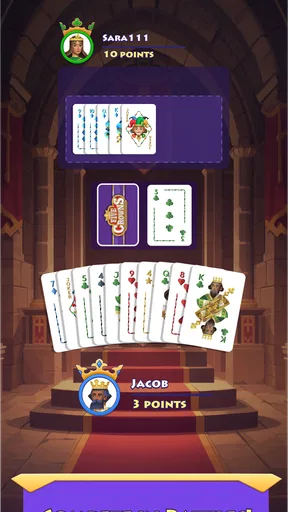
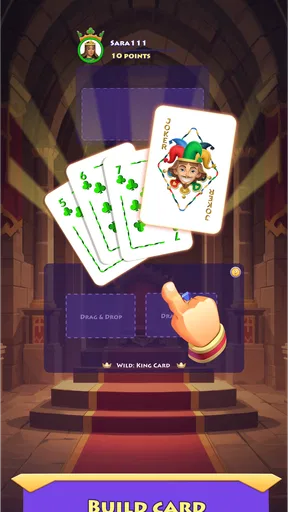





 Analysis by AppCompare
I spent time with Five Crowns: Kingdom Quest as a mobile card game, and my first impression was that it is better suited to thoughtful, stop-and-start play than to frantic tapping. It brings the familiar Five Crowns style of rummy to a phone or tablet, while the royal quest theme gives each session a little more personality than a plain digital card table. I found it easy to pick up, but not so simple that every round felt automatic.
That distinction matters. This is not a game I would choose when I want constant action, a large world to explore, or a quick reflex challenge. It is a compact card game for players who enjoy arranging possibilities, watching what has already been discarded, and deciding when a hand is ready to close. The free entry point makes it approachable, although optional purchases ranging from $1.99 to $99.99 per item mean I would still check the purchase settings before handing the device to a child.
How the game feels in ordinary play
The central appeal is the rummy-like structure. You draw, examine the cards in your hand, and try to organize them into useful groups or runs while keeping unwanted cards under control. The Five Crowns format has an important twist compared with standard rummy: the changing wild-card element affects how I evaluate nearly every draw. A card that looks mediocre at first can become valuable when it completes a flexible combination, while a seemingly obvious discard can reveal too much about my plan.
That makes the game feel deliberate rather than random, even though luck remains part of the experience. I rarely felt that I was simply waiting for one perfect card. Instead, I was usually comparing two imperfect options: hold a card that might become useful later, or discard it now to keep the hand manageable. For a phone game, that is a good fit because I can pause mentally between turns without losing the thread.
The royal quest presentation gives the sessions a clearer identity than an anonymous collection of card rounds. I would not describe it as a substitute for a full adventure game, though. The card decisions remain the main event, and anyone downloading it for exploration, character development, or action should adjust expectations immediately. The theme frames the game; it does not replace the underlying tabletop-style strategy.
Why the pace works on a phone
In my experience, the perceived speed depends more on the amount of thinking I choose to do than on rapid animation. If I already know which cards I want to keep, a turn feels brisk. If I am weighing several possible groups, the same turn becomes slower in a satisfying way. That makes it practical for a short break, but it also gives careful players enough room to plan instead of forcing snap decisions.
A realistic use case is an evening when I have ten or fifteen minutes before doing something else. I can start a round, make a few decisions, and return to the game when I have enough attention for the next move. It also works during a quiet commute if I am using a device safely and have a stable opportunity to concentrate. I would not recommend treating it as background entertainment while watching a complicated show, because the best decisions require noticing suits, ranks, wild possibilities, and the changing shape of the hand.
Worth Reading Before You Choose

Flipboard Shows What News Apps Must Do Beyond the Feed

Switching to Android Auto Means Rethinking Your Driving Routine

Google Calendar Makes a Crowded Week Easier to Manage

Ludo King Makes the Most of the Minutes Between Plans

Baby Panda World Brings Quick Play to Modern Phones, but Its Game Library Feels Busy

ESPN’s Live Game View Makes Following Close Games Easier
One useful habit is to sort cards by the combination they could support, not only by their face value. I found that this reduces the temptation to chase a single attractive run while overlooking a safer group. Another is to review the discard pile before drawing from it. A discarded card can be useful, but it also tells me something about what is less likely to be available elsewhere and can tempt me into holding too many “maybe” cards.
What happens when a hand becomes complicated
The game feels most mentally demanding near the end of a round. Early on, I can afford to keep a flexible card or test a possible sequence. Later, every extra card has a cost because an unfinished combination can leave me with a poor final count. This is where the title shows its strongest strategic side: the best move is not always the one that creates the most impressive-looking set immediately.
I also noticed a trade-off between bold and conservative play. Holding several cards that could connect may produce a satisfying finish, but it can backfire if the needed draw never arrives. Breaking a promising combination to reduce risk feels less exciting, yet it is often the sensible choice when the hand is already close to completion. Players who enjoy probability-free certainty may find this frustrating, while people who like managing incomplete information will probably appreciate it.
Heavy-use moments are therefore more about decision density than about demanding graphics. A long session can become tiring because I am repeatedly scanning the hand and reconsidering the same possibilities. That is not a performance flaw, but it is a practical limitation: the game is relaxing when I play a few rounds, and more mentally taxing when I try to continue indefinitely.
For families, I would use the game as a conversation starter rather than assuming younger players will instantly understand strong play. The Everyone age rating makes it broadly accessible, but the difference between knowing the rules and making good decisions is significant. A child may need a few guided rounds to learn why keeping every potentially useful card is not always wise.
Stability and recovery in everyday use
From a practical viewpoint, I value a card game that lets me return to the table without a complicated setup. Five Crowns: Kingdom Quest has the kind of contained format that naturally suits recovery after an interruption: the action is divided into turns, and the state of a hand is easier to understand than the position of a large real-time game. If I am interrupted, I can usually refocus by checking the current hand and the most recent discard rather than reconstructing a fast-moving event.
That said, I would not confuse a turn-based design with a guarantee that every interruption will be harmless. Phone calls, switching apps, or closing the game at an awkward moment can still affect any mobile session. My advice is simple: finish a decision before putting the device down when possible, and avoid beginning a round if I know I will be interrupted repeatedly. The game rewards attention, even when it does not demand speed.
The current version is 1.9, and Bonfit has kept the product focused as a mobile card experience rather than turning it into an overloaded package. I like that focus because it keeps the basic purpose clear. At the same time, players who expect a huge stream of new content should approach it as a replayable card game, not as an endlessly expanding service. Its lasting value comes from trying different decisions and improving judgment, not from assuming every session will introduce something completely new.
The public response is encouraging without being so large that I would treat it as universal proof. It holds a 4.5 average from around 369 ratings, with about 47 written reviews, and has passed 50K+ installs. To me, that suggests a healthy level of interest among its audience, while also reminding me that the game is more specialized than the biggest casual card titles.
Device fit, cost, and the small points worth checking
The minimum operating-system requirement is Android 7.1, which gives the game a reasonably broad technical starting point for Android users. I would still consider the age and condition of the device rather than relying only on the operating-system number. Older phones may be perfectly capable of a card game, but storage pressure, background apps, and a tired battery can affect the overall experience of any installation.
Because the game is based around cards and turns rather than constant visual motion, I would expect it to be less demanding than a modern action game. That is an expectation based on the format, not a promise that every phone will behave identically. A device with limited free space or many apps competing for memory may still feel less responsive. Closing unnecessary background apps before a longer session is a sensible step, especially if the phone is already struggling elsewhere.
Screen size also changes the experience. On a larger phone or tablet, it is easier to inspect the whole hand and compare possible combinations without repeatedly shifting attention. A smaller screen can still work, but I found that careful sorting becomes more important because crowded cards make mistakes easier. If I were choosing a device specifically for this game, I would prioritize a clear display and comfortable touch accuracy over raw gaming power.
The game is free to start, which removes the biggest barrier to trying it. In-app purchases are available from $1.99 to $99.99 per item, so I would treat the free download as an opportunity to test the core experience before spending anything. This is particularly important for families: the Everyone rating supports broad access, but the purchase range makes device-level safeguards worthwhile.
For players who dislike any optional spending structure, a physical Five Crowns deck may be the better choice. A real deck offers face-to-face conversation, no battery concern, and a more tactile experience. The mobile version wins when I want convenience, a portable table, and a quick way to play without finding the cards or clearing a surface. Neither completely replaces the other.
How it compares with familiar card-game alternatives
Compared with solitaire, this game asks me to think less about clearing a fixed layout and more about building combinations while reacting to changing possibilities. Solitaire is often better when I want a solitary puzzle with a very familiar rhythm. Five Crowns: Kingdom Quest is more appealing when I want the rules to create tension through hand management and changing wild-card decisions.
Compared with a standard rummy app, the Five Crowns identity gives the game a different decision pattern. The extra card variety and shifting wild-card structure make me reconsider what counts as a flexible hand. Someone who already enjoys ordinary rummy may appreciate the variation, but a player seeking the simplest possible rules may prefer a more basic implementation.
Compared with fast multiplayer card games, this is the calmer option. I do not choose it when I want rapid rounds, constant competition, or the pressure of a live table. Its strength is that I can focus on the hand itself. That also means it may feel too quiet for players who need flashy action or immediate rewards to stay interested.
One of my more useful discoveries was that the game works well as a practice space for decision discipline. I can deliberately play a few rounds with a rule such as “avoid holding more than one speculative card” and see how that changes my results. This is not a formal training mode claim; it is simply a way to use the ordinary card structure more intelligently. The game becomes more interesting when I set myself a tactical goal instead of judging each round only by whether I win.
Who should install it, and who should skip it
I would recommend it to fans of rummy-style games, families looking for an approachable card title, and players who enjoy making choices under uncertainty. It is also a good match for people who prefer games that can be played in short sessions without requiring reflexes. The royal presentation adds enough character to make the experience feel like its own game rather than a bare rules engine.
I would be more cautious if you want a deep story, a large campaign, or a visually intensive adventure. The quest language may suggest more than the card format actually delivers. I would also skip it if optional purchases are a deal-breaker, or if you want a completely social experience around a physical table. In those cases, a traditional deck or a simpler card app may fit better.
New players should begin by learning to recognize safe combinations before attempting clever ones. Keep the hand flexible early, watch which cards other players appear to ignore, and avoid assuming that a high-value card is useful merely because it might connect later. Near the end of a round, reduce risk instead of waiting forever for a perfect arrangement. Those habits made my sessions more consistent and helped me understand the game faster than simply playing randomly.
My final view is favorable, with realistic limits. Five Crowns: Kingdom Quest is strongest when you want a thoughtful, portable card table rather than a full-scale adventure. It feels well matched to mobile play because the turns leave room for reflection, the format is comparatively light in its demands, and interruptions are easier to recover from than in a real-time game. The free starting point is useful, while the optional purchase range deserves attention before spending.
I would install it for a quiet break, a family learning session, or a few rounds when I want strategy without visual overload. I would not choose it for frantic entertainment or a substitute for playing face to face with a physical deck. For the right audience, though, the changing wild-card decisions and careful hand management give the game enough depth to remain engaging after the first introduction. Bonfit’s version is worth trying if that balance of familiarity, uncertainty, and relaxed pacing sounds like your kind of card game.
Pros
- Simple rules make it easy for new players to start.
- Quest progression gives each session a clear sense of purpose.
- Short rounds work well for quick mobile gaming sessions.
- Card visuals are clean and easy to read on smaller screens.
- Solo play is convenient when you do not have opponents available.
Cons
- Later challenges can feel repetitive after extended play.
- Random card draws may strongly affect the outcome.
- Some players may find the pace slower than other card games.
- The app may require extra storage as content and updates grow.
- Players seeking deep strategy may find the mechanics fairly limited.
FAQs for Five Crowns: Kingdom Quest
What is Five Crowns: Kingdom Quest?
Five Crowns: Kingdom Quest is a mobile card game inspired by the Five Crowns rummy-style format, presented with a fantasy kingdom theme. Players build sets and runs from their cards while managing changing wild cards and trying to finish each round with the lowest score. Its quest structure adds progression beyond a traditional card table, making it suitable for both casual matches and longer play sessions.
How do you play Five Crowns: Kingdom Quest?
Each round requires you to arrange cards into valid groups, usually sets of cards with the same value or runs of consecutive cards in the same suit. The number of cards dealt changes as the game progresses, and one card value typically acts as the wild card for that round. On every turn, you draw from the deck or discard pile, then discard one card and aim to lay down your combinations efficiently.
Can I play Five Crowns: Kingdom Quest offline?
Offline availability may depend on the specific game mode and the version installed on your Android or iOS device. Single-player or quest content is generally the most likely to remain accessible without an internet connection, while online competitions, advertisements, cloud saves, and certain social features may require connectivity. It is best to check the app-store description and test the desired mode after installation.
Is Five Crowns: Kingdom Quest free to download?
The game may be available as a free download, but free access does not always mean that every feature is included without limits. Mobile games can use optional purchases, advertising, energy systems, or paid content to support development. Before downloading, review the current Google Play or App Store listing for in-app purchase details, supported devices, age rating, and whether an internet connection is required.
Is Five Crowns: Kingdom Quest suitable for beginners and children?
Five Crowns: Kingdom Quest is relatively approachable because its main objective is easy to understand: create sets and runs while reducing your score. However, beginners may need a few rounds to learn how changing wild cards affect strategy and when to draw from the discard pile. Parents should also review the current age rating, advertising, purchases, and online features before allowing children to play.


